
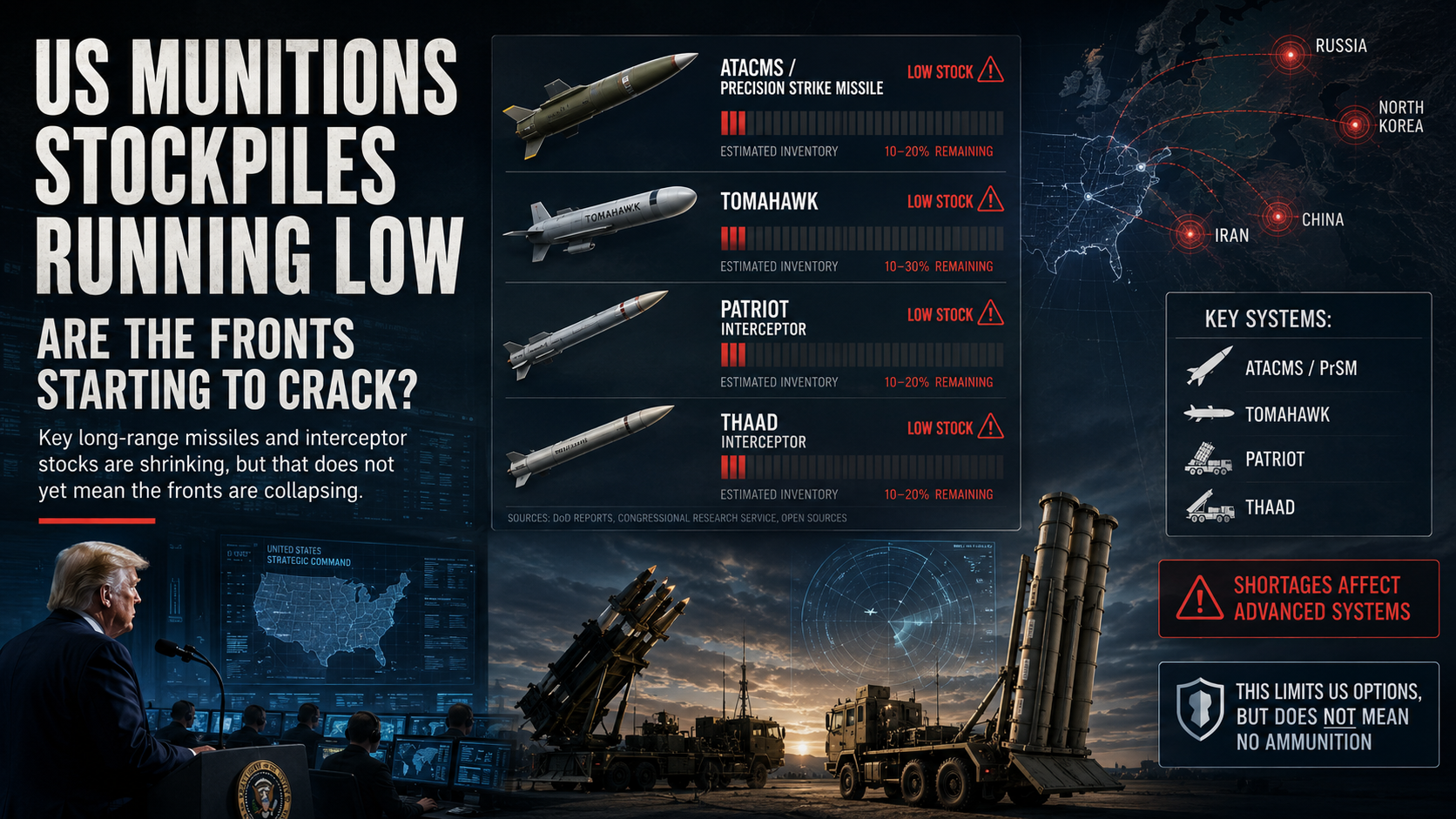
America's stockpiles of key long-range missiles and interceptor systems are severely depleted after more than five months of strikes on Iran, according to recent US media reports. Citing sources close to the Pentagon, Reuters and CNN report that stocks of ATACMS and Precision Strike Missiles are nearly exhausted, and close to half of the US Tomahawk arsenal has already been used. Other sources point to an 80% drop in stocks of key missile-defense interceptors. Analysts at the CSIS think tank estimate fewer than 827 Patriot interceptors and fewer than 278 THAAD interceptors remain in US inventories.
President Donald Trump has denied the reports, calling them "treasonous leaks" and vowing to pursue those responsible. Pentagon spokesperson Sean Parnell also called the claims false, without providing concrete figures.
Experts, including former Defense Secretary Leon Panetta, describe the situation bluntly as "poor planning" by the Pentagon, warning the shortages could limit the US's ability to respond to other threats — from Russia, China or North Korea — for the next several years while stockpiles are rebuilt. Former munitions advisor Mark Cancian notes the problem could have been avoided had the administration negotiated a ceasefire with Iran earlier in the conflict.
Does this mean the fronts are collapsing? Not necessarily. Analysts stress the US isn't "completely out of ammunition" — the shortages concern specific, advanced systems (long-range missiles, interceptors). Still, the gaps meaningfully constrain the administration's military options, particularly regarding any escalation with Iran, and have raised concern among Gulf allies who rely heavily on US air-defense systems.









.jpg)