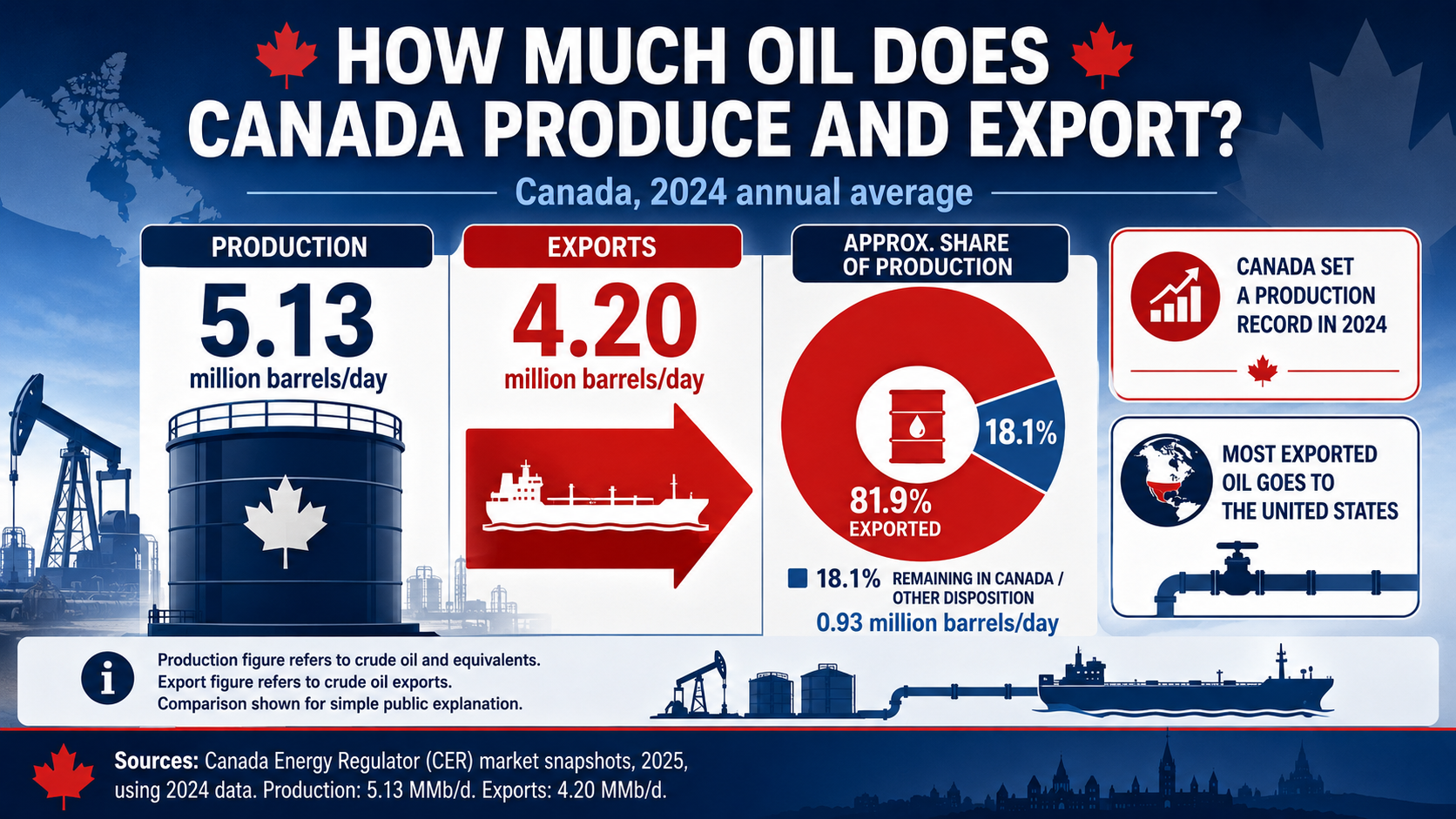
Canada is one of the world’s important oil producers, so many Canadians ask a simple question: why is gasoline still so expensive at home?
The answer is that producing oil does not automatically mean cheap gasoline. Canada sells and buys oil in a global market. Crude oil prices are usually set internationally, not only inside Canada. When global oil prices rise, Canadian gasoline prices usually rise too.
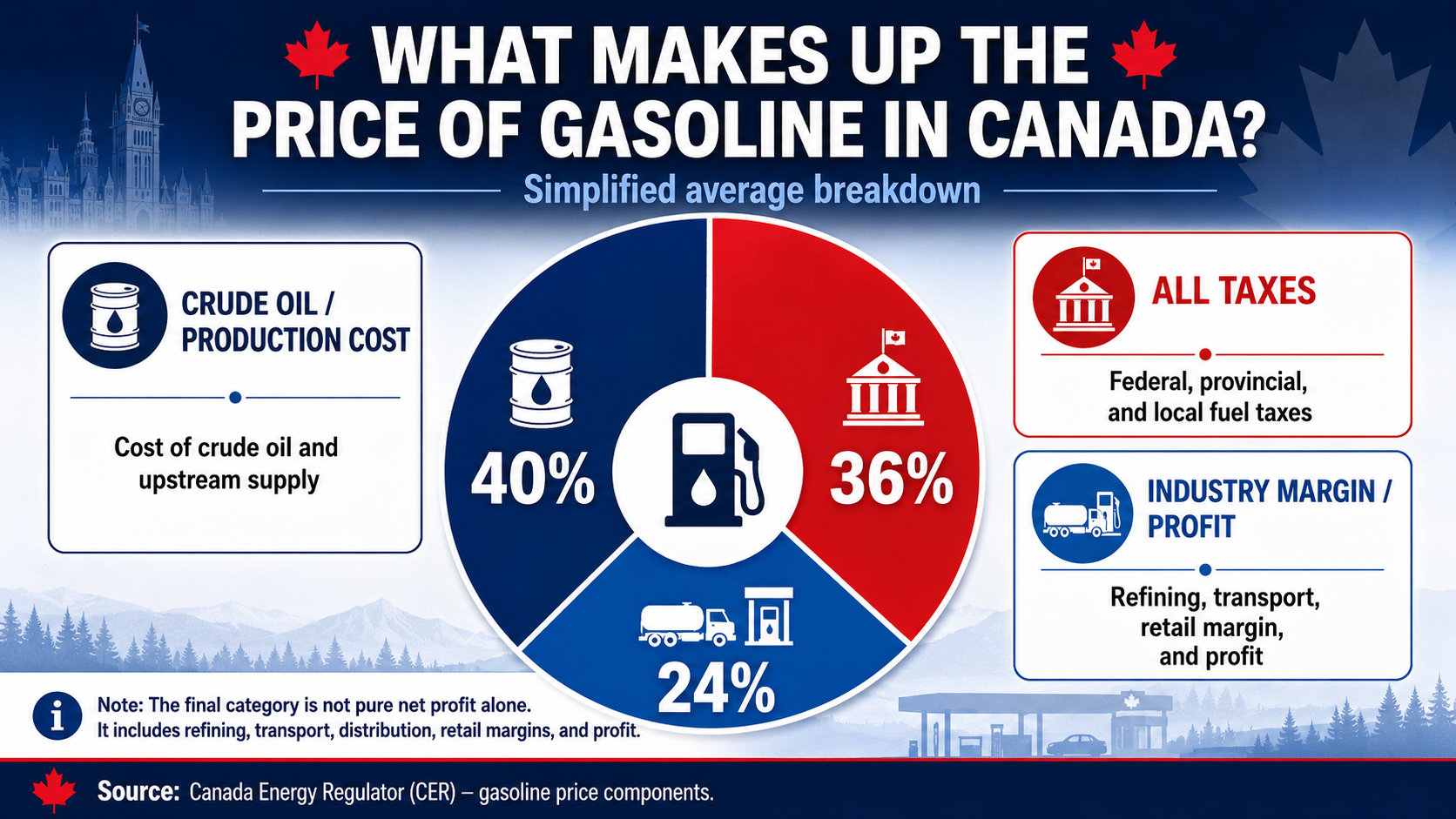
The price at the pump is made from several parts. Crude oil is usually the biggest factor, but it is not the only one. Refining costs, transportation, marketing, retail margins, and taxes are also included. According to Canadian government sources, gasoline price differences across Canada are affected by taxes, competition, sales volume, and the location and type of gas stations.
Taxes are another major reason. Canada has federal fuel taxes, provincial fuel taxes, and in some places additional municipal fuel taxes. The federal excise tax on gasoline is 10 cents per litre, and provinces add their own fuel taxes. These taxes make Canadian gasoline more expensive even before retail margins are added.
Another reason is refining. Canada produces a lot of crude oil, especially in Western Canada, but not all regions have enough local refining capacity for their own demand. Natural Resources Canada notes that Canada is a large net oil exporter, but crude oil imports still satisfy more than half of domestic refinery demand. This means Canada can export crude oil and still import certain types of crude or refined products depending on location and refinery needs.
The exchange rate also matters. Oil is usually priced in U.S. dollars. When the Canadian dollar is weaker against the U.S. dollar, oil and gasoline become more expensive for Canadians.
So is the Strait of Hormuz the reason for high gas prices? It can be part of the reason, especially during a crisis. The Strait of Hormuz is one of the world’s most important oil shipping routes. If conflict threatens shipping there, global oil prices can rise, and Canadian gas prices can follow. Recent reports also show that crude prices and energy exports have been affected by Iran-related tensions.
However, Hormuz is not the whole explanation. Even without a crisis in the Persian Gulf, Canadians can still pay high gasoline prices because of global pricing, taxes, refining limits, transportation costs, and the Canadian dollar.
In simple words: Canada may produce a lot of oil, but Canadian drivers buy gasoline in a global energy system. That system does not guarantee low domestic prices just because the country has oil underground.



.jpg)