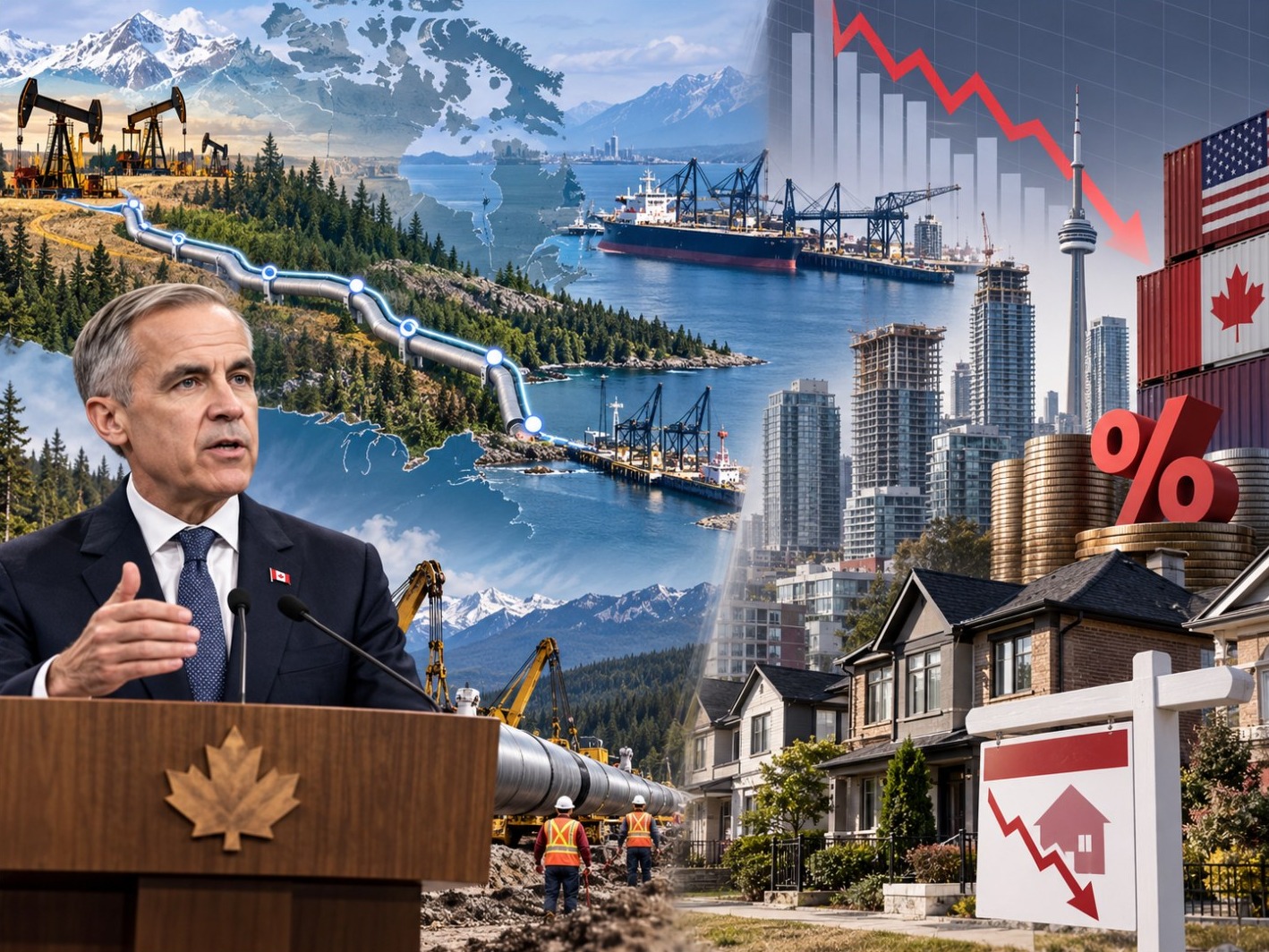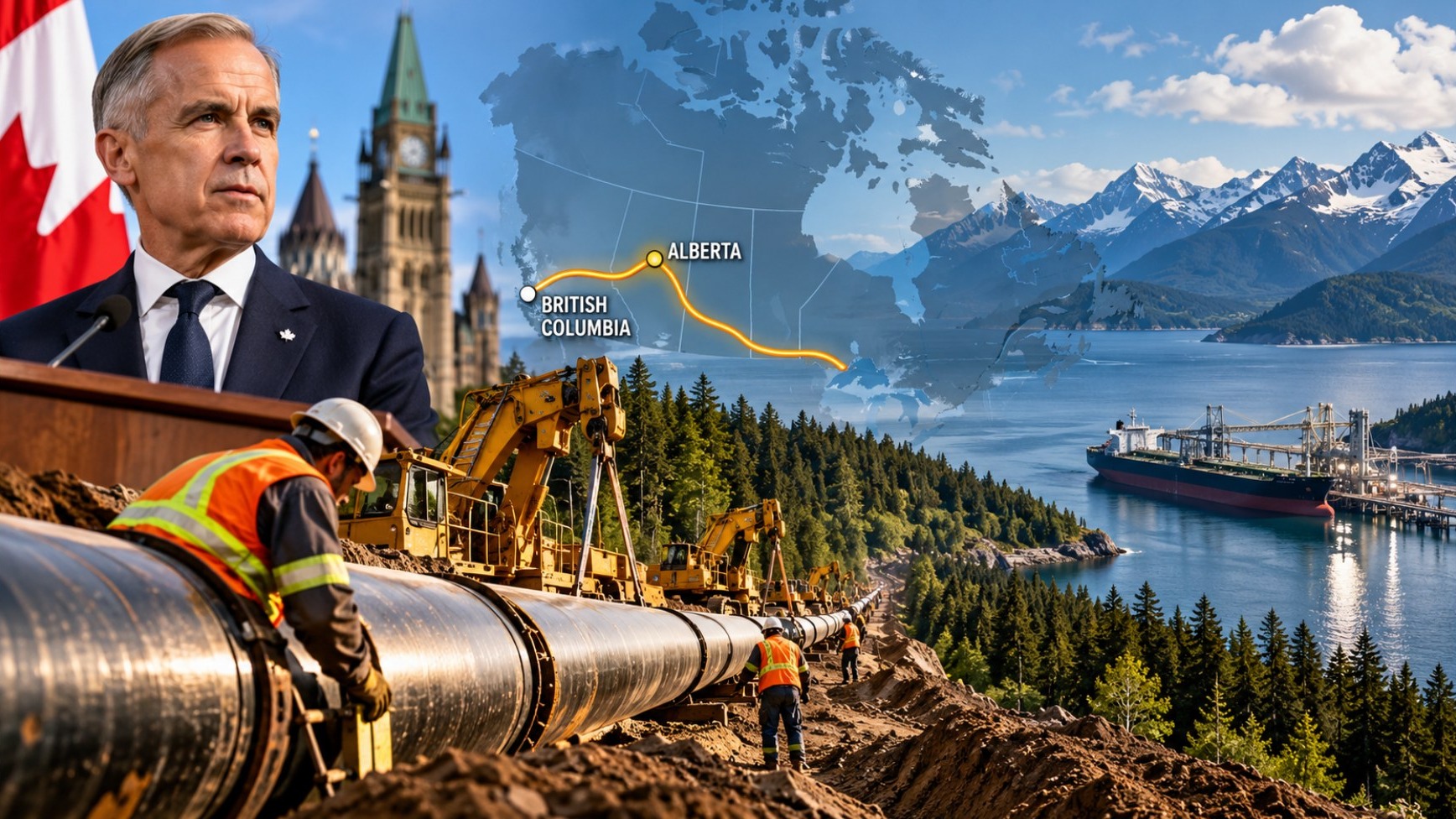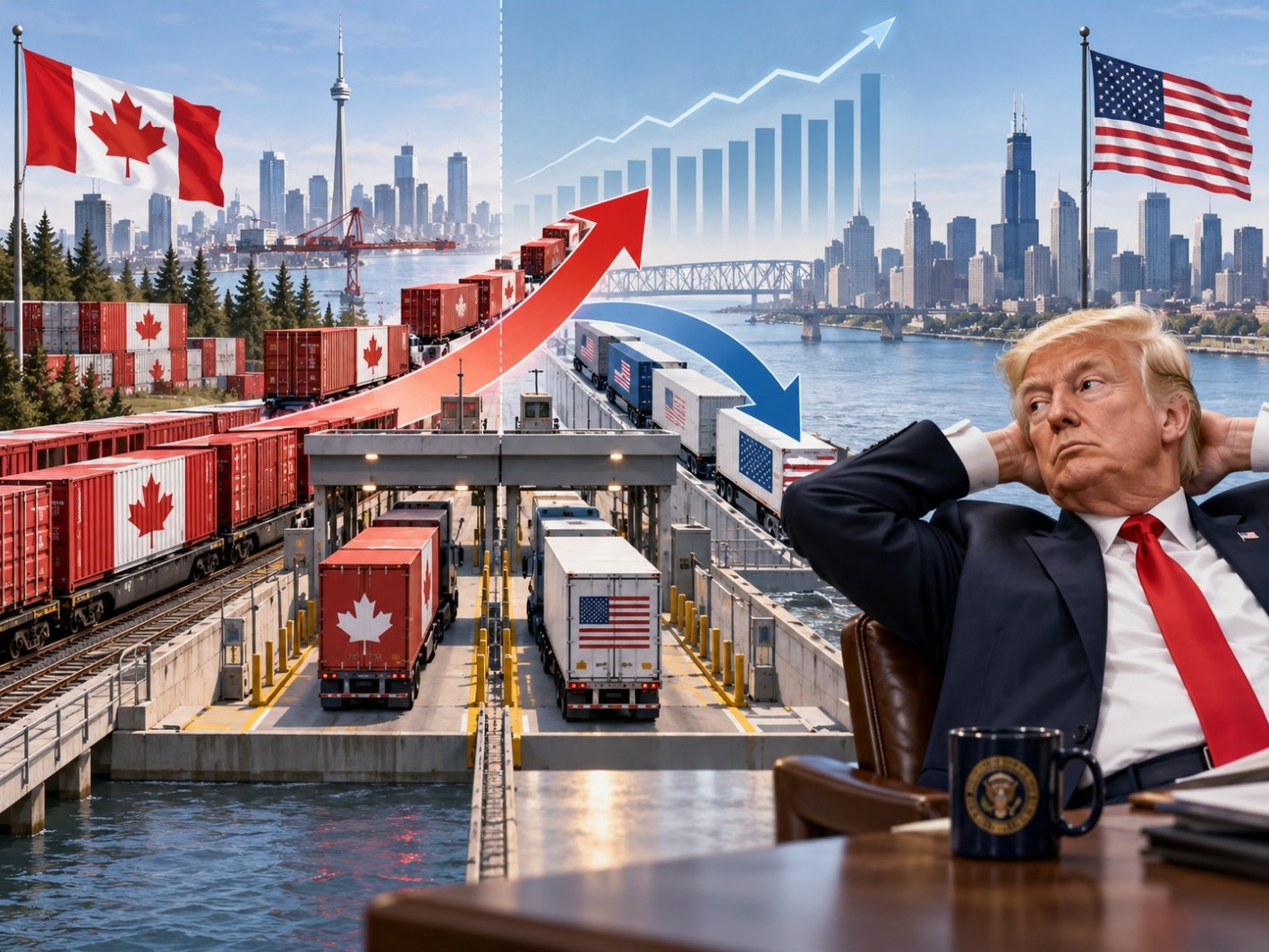
On paper, August was a remarkable month for Canadian trade. In practice, the numbers tell a more complicated story, one written in the shadow of tariffs and beside a negotiating table that stands empty.
According to Statistics Canada, the country’s merchandise trade surplus rose to $4.2 billion in August, up from $787 million in July, the sixth surplus in a row. Exports climbed 2.5 percent to $77.9 billion, while imports fell 2 percent to $73.7 billion, their first decline since January. With the United States alone, the surplus widened from $6.1 billion to $11.2 billion, the largest monthly improvement the agency has ever recorded for that balance. Exports to the US rose 8.1 percent, imports from the US fell 2.5 percent, and energy exports grew for the first time since April.
Economists warn against reading too much into the jump. Statistics Canada suggested that American companies rushed to place orders before new US tariffs took effect; 50 percent duties on a range of Canadian exports began on August 22. CIBC economist Katherine Judge expects the spike to fade in September and says Canada’s trade position will likely weaken later this year without a deal with Washington.
The new tariffs cover about 5 percent of Canadian exports to the US, roughly $28 billion worth of goods, and unlike earlier rounds they do not spare products covered by CUSMA. Still, RBC’s Nathan Janzen notes that more than 80 percent of Canadian exports to the United States continue to cross the border duty-free. Canada’s counter-tariffs took effect on September 8.
Meanwhile, the political mood is cold. President Donald Trump said he is in no hurry to resume trade talks with Canada and could not say whether they would restart before the US midterm elections. He accused Canada of treating the United States badly and said Ottawa would have to be honest before any agreement, while insisting that the dispute will eventually be resolved.
For households and small businesses, including many in the Polish community, the lesson is that one good month is not a trend. Until there is a deal, uncertainty remains the most expensive import of all.