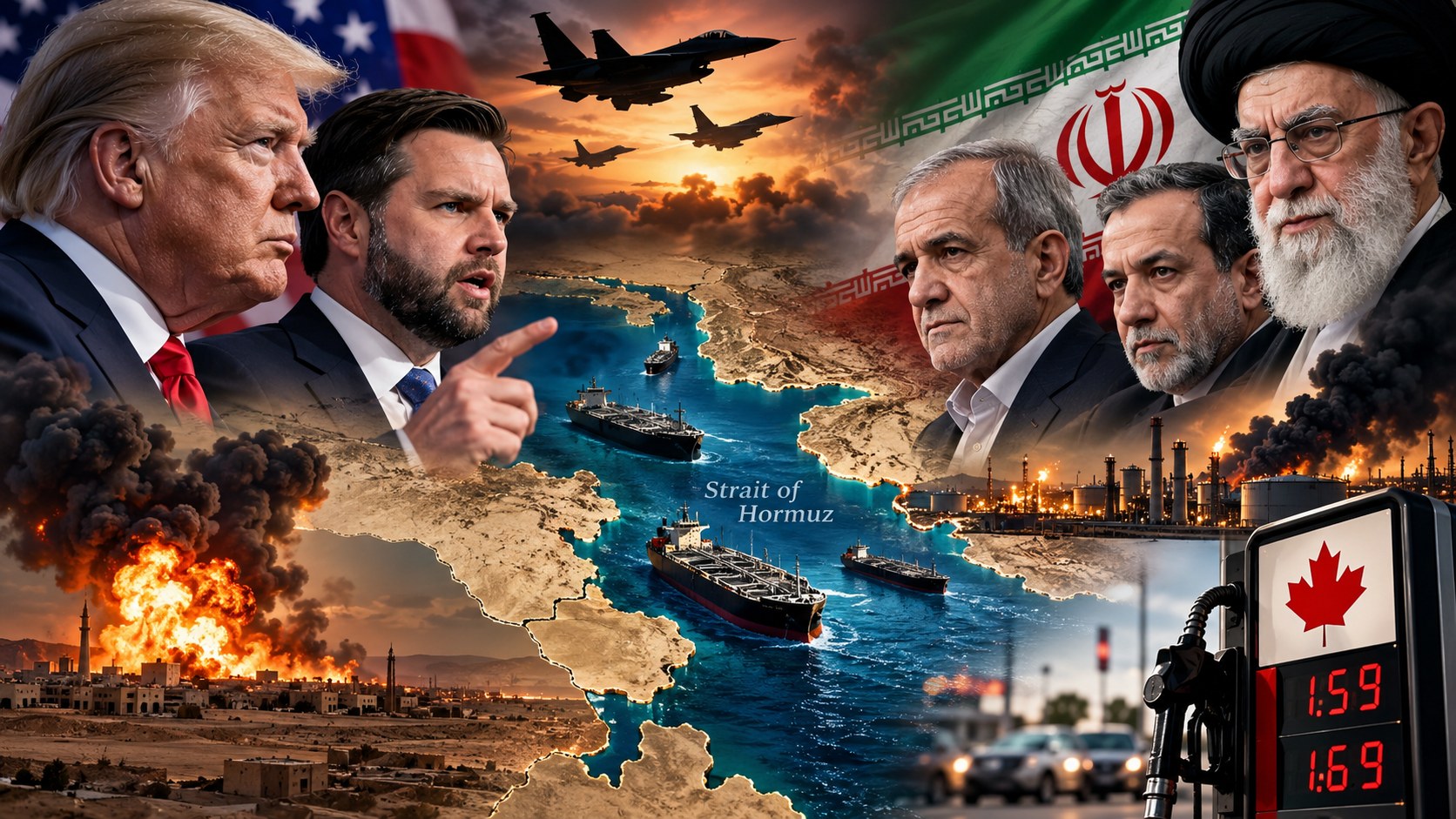
Seven months after the first bombs fell on Tehran, the war between the United States and Iran has reached the point where every word is weighed on a scale. This week, Vice President JD Vance placed a heavy weight on that scale. Iran, he told Reuters, must make a “meaningful” cut to its uranium enrichment before the guns can fall silent. Promises of future restraint, he made clear, will no longer buy anything.
His question was simple and pointed: why would a country that says it does not want a nuclear weapon need uranium enriched to 60 percent?
The war began on February 28, when American and Israeli strikes killed Iran’s Supreme Leader, Ali Khamenei. In June, Vance himself brokered a fragile peace deal, and it fell apart almost as quickly as it was agreed. Since then, proposals have travelled between the two capitals like letters between estranged neighbours, each one meant to end the fighting and reopen the Strait of Hormuz, the narrow gateway through which so much of the world’s oil and gas must pass.
President Donald Trump has rejected Tehran’s latest offer and warned that military operations could grow more intense after the November midterm elections. Qatar, one of the quiet go-betweens, says the conversation has not ended.
Perhaps the strangest part of this war is that Washington is no longer sure who it is talking to. Vance says the United States is in contact with President Masoud Pezeshkian and Foreign Minister Abbas Araghchi, but admits it is unclear how much power they truly hold. Trump put it more bluntly: his greatest difficulty, he said, is that nobody knows who is running Iran. Tehran replied that the confusion comes from Washington’s own contradictory messages.
Meanwhile, the war burns through roughly $3 billion a month for the United States and keeps the world’s energy markets on edge. Its sparks are landing far from Tehran. Saudi Arabia says Houthi attacks damaged two airports near the Yemeni border and wounded three people, and Yemen’s government says the airport in Aden was targeted too. Off the coast of Qatar, a tanker reported being struck by several projectiles.
For Canadians, this is not a distant story. Every tremor in the Gulf eventually reaches the gas station and the heating bill. If diplomacy reopens Hormuz, this winter may be a little gentler on family budgets. If it fails, the cold may arrive in more ways than one.