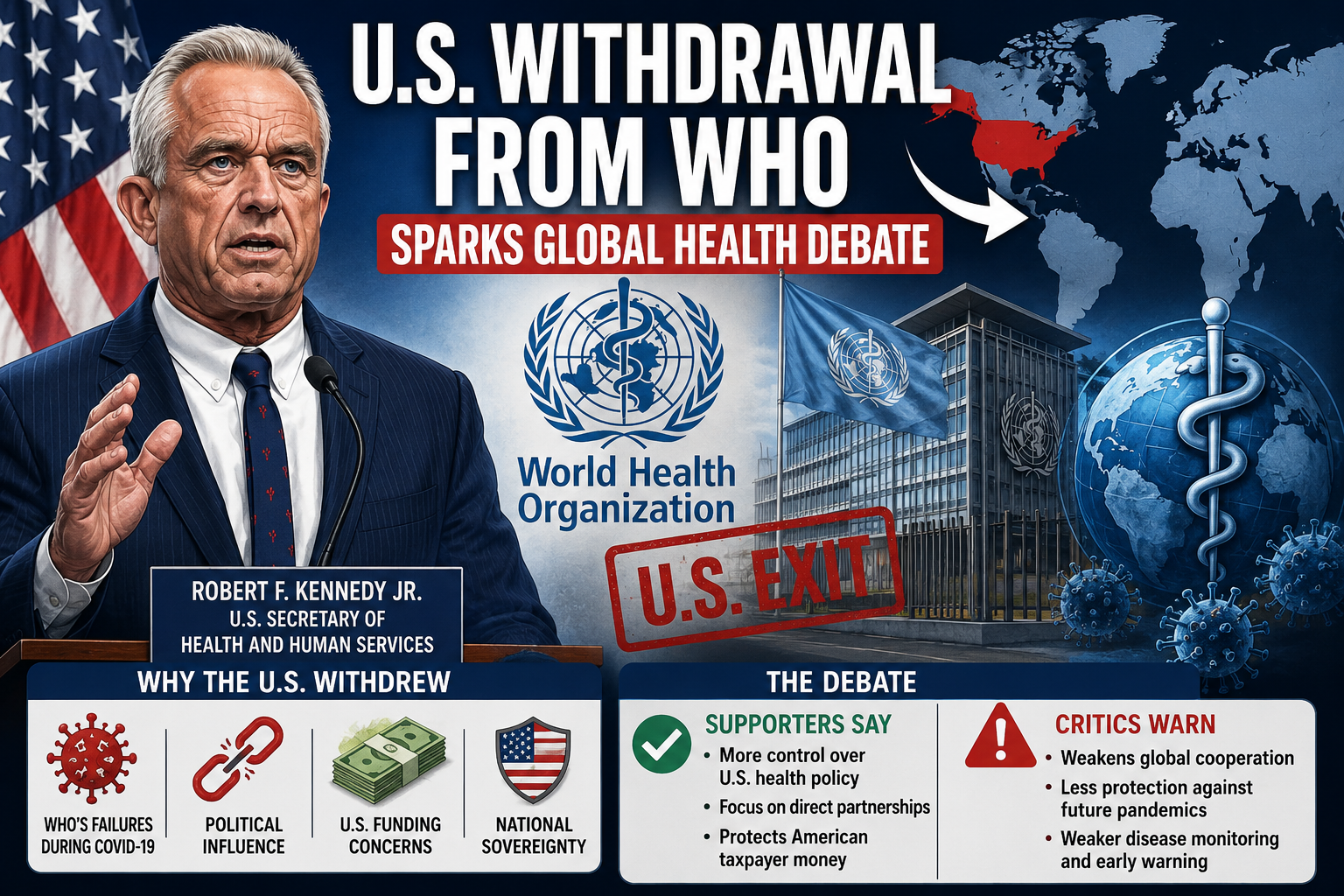
The United States has officially withdrawn from the World Health Organization, a decision that has created one of the biggest debates in global health policy in recent years.
The U.S. government said the withdrawal was connected to concerns about the WHO’s handling of the COVID-19 pandemic, political influence inside the organization, and the need for America to have greater control over its own health decisions. U.S. officials also said the country will now focus more on direct cooperation with other nations and health organizations instead of working through the WHO.
Supporters of the decision argue that the United States should not allow unelected international officials to influence American health policy. They also say American taxpayers should not fund an organization that, in their view, failed during the pandemic and needs major reform.
Critics see the decision very differently. They warn that leaving the WHO could weaken international cooperation during future health emergencies. The WHO plays an important role in tracking outbreaks, sharing disease information, coordinating vaccine planning, and helping poorer countries respond to epidemics.
The biggest concern is what happens during the next global health crisis. Viruses do not respect borders, and public health experts say early warning systems depend on international cooperation. If the United States is less involved in global disease monitoring, both America and other countries may have less information during future outbreaks.
At the same time, the withdrawal reflects a larger political debate: should health policy be controlled mainly by national governments, or should countries cooperate through international organizations?
For now, the U.S. withdrawal from the WHO is more than a health decision. It is a political decision, an economic decision, and a sign of changing global leadership. The long-term effects may only become clear during the next major international health emergency.



.JPG)