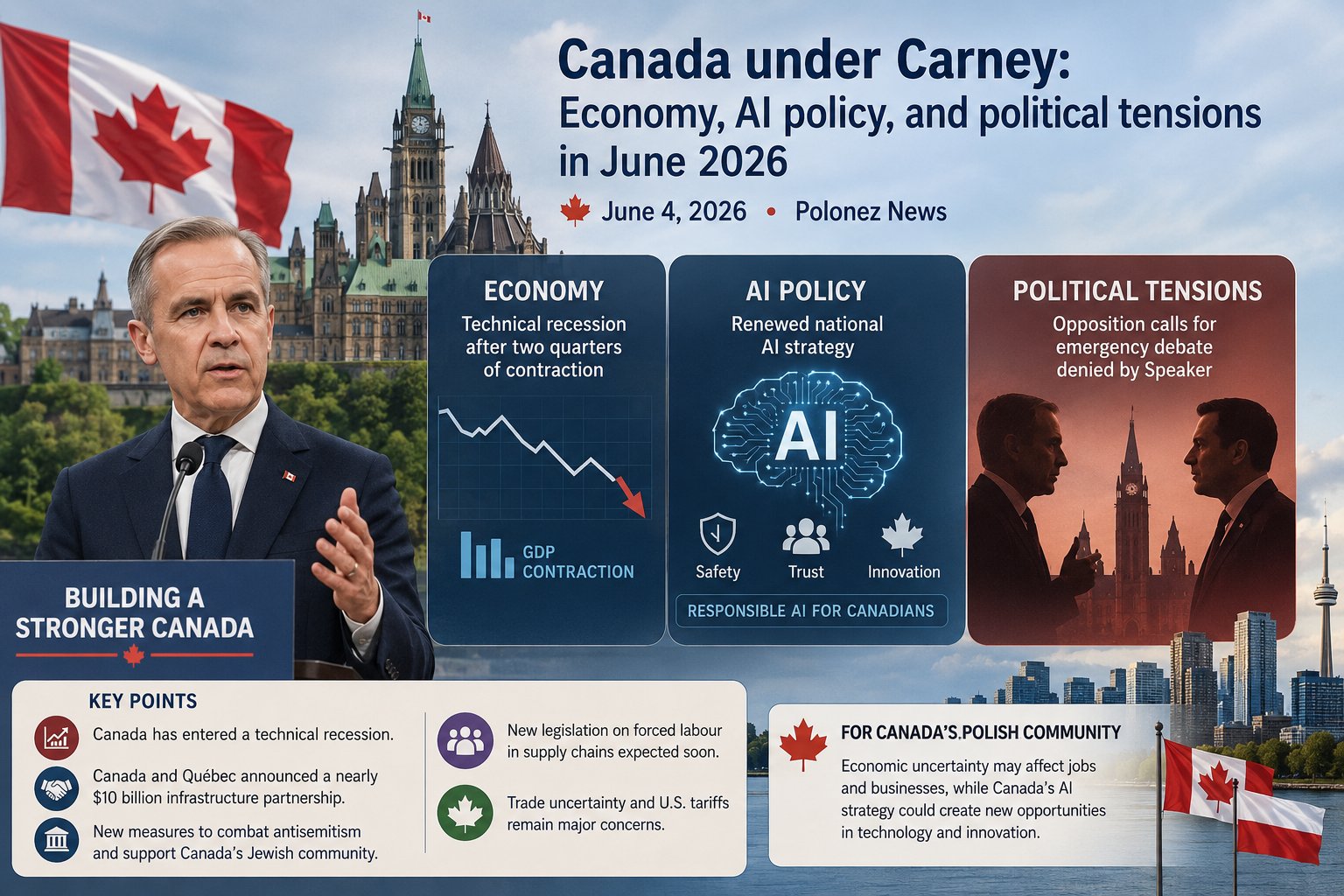
Recent GDP figures show that Canada has entered what economists call a technical recession, meaning two consecutive quarters of economic contraction. Statistics Canada reported a small decline in the first quarter of 2026, following a contraction in the final quarter of 2025. Carney has described the economy as going through a period of adjustment, while arguing that his government’s long-term economic plan remains focused on rebuilding Canada’s competitiveness.
The economic debate has quickly become political. Conservative leader Pierre Poilievre has accused the government of mismanaging the economy and requested an emergency debate in Parliament. The issue has become one of the main points of tension between the government and the opposition.
Ottawa is also moving forward with its artificial intelligence agenda. The federal government has been preparing a refreshed national AI strategy focused on innovation, adoption, public trust, and responsible use of new technologies. Canada has already introduced an AI strategy for the federal public service and has emphasized responsible AI governance.
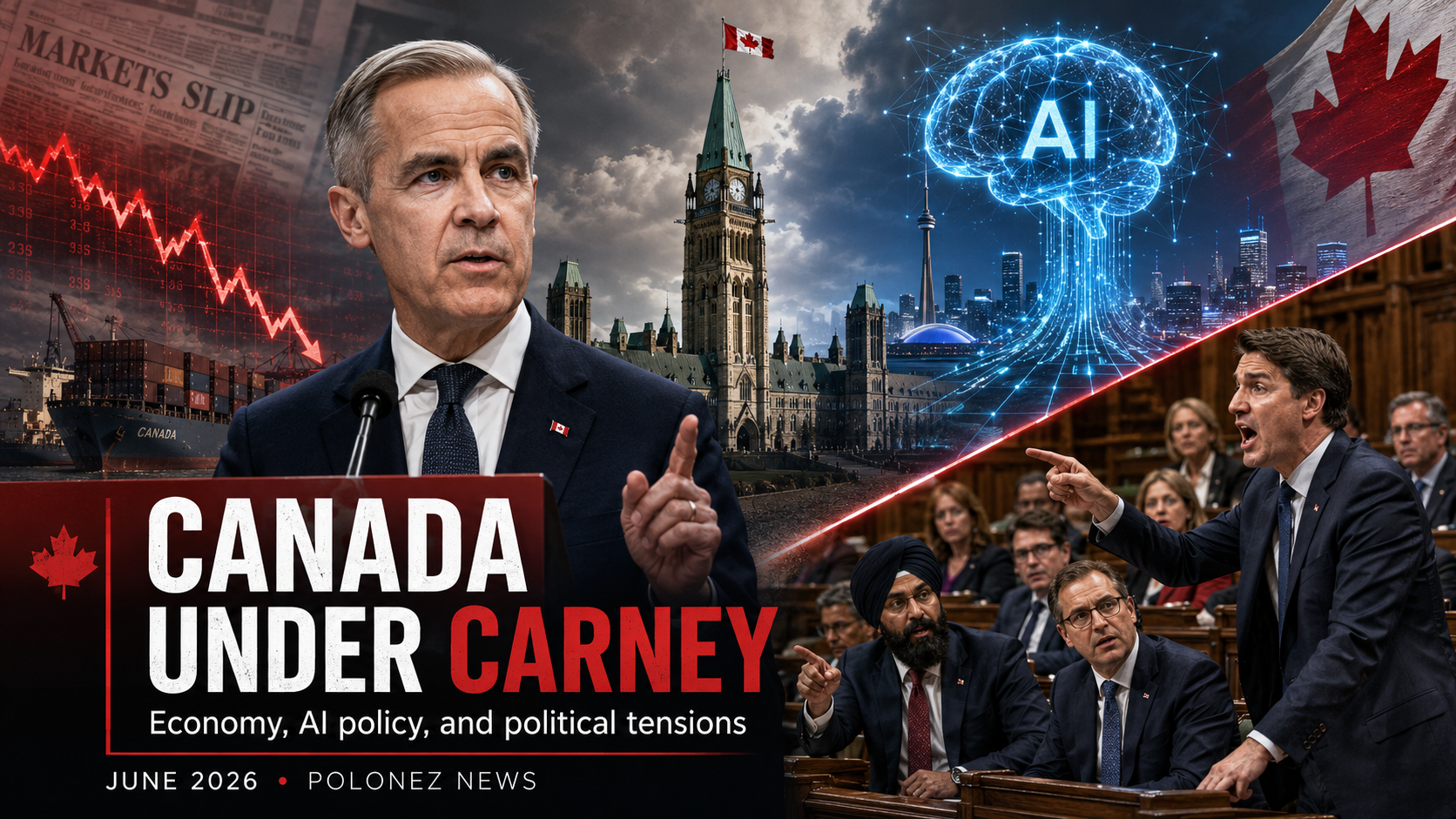
Canada has entered a technical recession after two quarters of weak economic performance.
Trade uncertainty and U.S. tariffs remain major concerns for Canadian businesses.
The Carney government is promoting long-term economic restructuring and new infrastructure investment.
Canada and Québec announced a major infrastructure partnership, reported at nearly $10 billion.
Ottawa is preparing a renewed national AI strategy aimed at balancing innovation with public trust and safety.
For Canada’s Polish community, these developments matter directly. Economic uncertainty can affect jobs, small businesses, and household costs, while Canada’s AI strategy may create new opportunities in technology, education, and entrepreneurship.


.jpg)